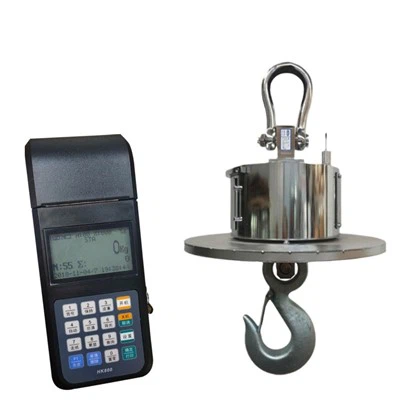
As a trusted supplier of the 10 Ton Weighing Scale, I've witnessed firsthand the diverse applications and benefits of using such robust equipment, especially when it comes to item counting. In this blog, I'll share in - depth knowledge on how to effectively use a 10 - ton weighing scale for counting items.
Understanding the Basics of Item Counting with a 10 - Ton Weighing Scale
Before delving into the actual process, it's crucial to understand the fundamental principle behind using a weighing scale for item counting. The basic idea is that if you know the average weight of a single item, you can calculate the number of items by weighing the entire batch. For instance, if a single bolt weighs 0.1 pounds, and a pile of bolts weighs 10 pounds, then you can infer that there are 100 bolts in the pile.
When dealing with a 10 - ton weighing scale, this concept remains the same, but on a much larger scale. The scale is designed to handle heavy loads, making it ideal for industries that deal with large quantities of heavy items such as construction materials, metal parts, or large - scale manufacturing components.
Preparing the 10 - Ton Weighing Scale
The first step in using the 10 - ton weighing scale for item counting is proper preparation.
Calibration
Calibration is the cornerstone of accurate weighing and counting. A poorly calibrated scale can lead to significant errors in your item count. Most modern 10 - ton weighing scales come with built - in calibration features. You should follow the manufacturer's instructions carefully to calibrate the scale. Usually, this involves using a known weight (a calibration weight) to adjust the scale so that it reads accurately. For example, if you have a 1 - ton calibration weight, you place it on the scale and adjust the settings until the scale shows exactly 1 ton.
Location
The location where you place the scale also matters. It should be on a flat, stable surface. Uneven surfaces can cause the scale to give inaccurate readings. In industrial settings, it's common to install the scale on a reinforced concrete platform to ensure stability. Additionally, the area should be free from vibrations, as these can also affect the scale's performance.
Selecting the Right Unit of Measurement
The 10 - ton weighing scale can typically measure weight in different units such as kilograms, pounds, or tons. You need to select the unit that is most appropriate for your item counting task. If you are dealing with small - to - medium - sized items, kilograms or pounds might be more convenient. However, for large - scale industrial items, tons could be the better choice.
Counting Items in a Homogeneous Batch
A homogeneous batch consists of items that are identical in weight. This is the simplest scenario for item counting using a weighing scale.
Step 1: Determine the Average Weight of a Single Item
You can do this by weighing a small sample of the items. For example, if you are counting nails, you can weigh 10 nails and then divide the total weight by 10 to get the average weight of a single nail. Make sure the sample size is large enough to be representative. A larger sample size generally leads to a more accurate average weight calculation.
Step 2: Weigh the Entire Batch
Place the entire batch of items on the 10 - ton weighing scale. Wait for the scale to stabilize and give a reading.
Step 3: Calculate the Number of Items
Divide the total weight of the batch by the average weight of a single item. For example, if the average weight of a single nail is 0.01 pounds, and the total weight of the nail batch is 100 pounds, then the number of nails is 100 / 0.01 = 10,000 nails.
Counting Items in a Non - Homogeneous Batch
In many real - world scenarios, the items in a batch are not identical in weight. For example, in a batch of metal castings, there might be slight variations in size and weight due to the manufacturing process.
Sampling and Statistical Analysis
To handle non - homogeneous batches, you need to take a larger sample. Select a random sample of items from different parts of the batch. Weigh each item in the sample individually and calculate the average weight and the standard deviation. The standard deviation gives you an idea of how much the weights of the items vary.
Using a Weighing Algorithm
Some advanced 10 - ton weighing scales, like our Precision Crane Scale, come with built - in algorithms to handle non - homogeneous batches. These algorithms use the sample data (average weight and standard deviation) to estimate the number of items in the batch more accurately. The scale takes into account the variation in item weights and provides a more reliable item count.
Dealing with Large - Scale Batches
When dealing with extremely large batches, it might not be practical to weigh the entire batch at once. In such cases, you can use a sampling and extrapolation method.
Sampling
Take multiple samples from different parts of the large batch. For example, if you have a large pile of gravel, you can take samples from the top, middle, and bottom of the pile. Weigh each sample and calculate the average weight per unit volume.
Extrapolation
Estimate the total volume of the large batch. You can use geometric measurements or other volume - estimation techniques depending on the shape of the batch. Then, multiply the average weight per unit volume by the total volume to get an estimate of the total weight of the batch. Finally, divide the total estimated weight by the average weight of a single item to get the estimated number of items.
Safety Considerations
When using a 10 - ton weighing scale, safety should always be a top priority.
Overloading
Never exceed the maximum capacity of the scale. Overloading can not only damage the scale but also pose a serious safety hazard. The scale is designed to handle up to 10 tons, so make sure you do not place more than this weight on it.
Operator Training
Operators should be properly trained on how to use the scale. They should know how to calibrate it, how to handle different types of batches, and how to interpret the scale's readings. In addition, they should be aware of the safety procedures in case of emergencies, such as power outages or scale malfunctions.


Maintenance of the 10 - Ton Weighing Scale
Regular maintenance is essential to keep the 10 - ton weighing scale in good working condition.
Cleaning
Keep the scale clean. Remove any debris, dust, or dirt that might accumulate on the weighing platform. In industrial environments, this might require daily cleaning to prevent build - up that could affect the scale's accuracy.
Inspection
Regularly inspect the scale for any signs of damage, such as cracks in the weighing platform or loose connections. Check the load cells (the components that measure the weight) for proper functioning. If you notice any issues, contact the manufacturer or a professional technician for repairs.
Conclusion
Using a 10 - ton weighing scale for item counting can be a highly efficient way to manage large - scale inventory in industrial settings. By following the steps outlined above, from proper preparation and calibration to accurate counting techniques, you can ensure that you get reliable item counts.
If you are in the market for a high - quality 10 Ton Weighing Scale, or if you are interested in our Stainless Steel Crane Scale or Precision Crane Scale, we are here to assist you. We offer a wide range of weighing solutions to meet your specific needs. Contact us today to start a discussion about your requirements and explore how our products can benefit your business.
References
- "Industrial Weighing Technology Handbook" - A comprehensive guide on industrial weighing equipment and their applications.
- Manufacturer's manuals for the 10 - ton weighing scale, which provide detailed information on calibration, operation, and maintenance.