




Handling Equipment
Why Choose HEBEI EMET MACHINERY & TECHNOLOGY CO., LTD?
Our company is a mechanical manufacturing enterprise, formerly a lifting machinery manufacturing factory, established in 2005. Located in Qingyuan District, Baoding City, Hebei Province, China, known as the hometown of lifting machines, covering an area of 3200 square meters, with advanced production equipment and a comprehensive quality management system, we are committed to providing customers with high-quality mechanical manufacturing services.
Professional Technical Team
We have a highly skilled team with strong technical strength and over 100 experienced employees. We insist on continuous innovation and have a series of independently developed precision manufacturing technologies and equipment.
Wide Range of Products
Our products cover various mechanical equipment, such as anti fall devices, electronic scales, manipulator arms, etc; At the same time, we can also customize production according to customer needs.
Quality Assurance
We strictly follow the requirements of the ISO9001 quality management system for production, and all products have passed CE certification, with a high market share.At the same time, we also have advanced production lines to provide customers with high-quality mechanical equipment.
Professional Service
We provide excellent after-sales service, track usage, and provide positive feedback. We will respond quickly within 24 hours and provide customers with solutions.




What is Handling Equipment?
Handling equipment, refers to the tools, machines, and systems used to move, store, control, and protect materials, goods, and products throughout manufacturing, distribution, and consumption processes, aiming to improve efficiency, safety, and productivity by reducing manual labor and optimizing workflows.

Features of Handling Equipment
High Load-Bearing Capacity
Designed to withstand heavy loads of varying weights, suitable for Pallet Truck, Pallet Stacker and Lift Platform to handle industrial goods safely.
Stable Operation Performance
Equipped with robust structural design and anti-slip components, ensuring smooth and stable movement even under full load conditions.
Ergonomic Design
Humanized operation interface and comfortable grip/control system reduce operator fatigue during long-hour handling work.
Versatile Application Scenarios
Compatible with warehouses, factories, logistics centers and other venues, adapting to different handling needs of pallets, goods stacking and height adjustment.
Durable Material Selection
Adopts high-quality steel and wear-resistant parts, enhancing corrosion resistance and extending the service life of the equipment.
Precise Control System
Equipped with sensitive steering and lifting/lowering controls, enabling accurate positioning of goods and improving handling efficiency.
Safety Protection Mechanisms
Comes with overload protection, emergency stop button and anti-tilt devices to avoid potential safety hazards during operation.
Low Noise Operation
Optimized transmission structure and silent components minimize noise during work, maintaining a quiet working environment.
Easy Maintenance & Upkeep
Simplified structural design with easily accessible parts, reducing maintenance difficulty and maintenance cost for daily use.
Compact & Space-Saving
Sleek body design allows easy maneuvering in narrow aisles and limited spaces, maximizing space utilization in warehouses.
Adjustable Working Parameters
Lift height, moving speed and other parameters can be adjusted according to actual needs, adapting to different stacking and handling requirements.
Anti-Skid & Anti-Collision Design
Equipped with anti-skid platforms and collision avoidance buffers, protecting both the equipment and the goods from damage.
Wide Adaptability to Ground Conditions
Sturdy wheels and shock-absorbing components ensure stable operation on uneven ground, not limited by floor flatness.
Certified Quality Assurance
Complies with international industrial standards and passes strict quality inspections, guaranteeing reliable performance and safe use.
Types of EMET Handling Equipment
Pallet Trucks
- Pallet Racks & Shelving: Systems for organizing items for easy access. Manual/Semi-Electric/Fully Electric models.
- Pallet Truck With Measuring System: High-density, automated weight measuring solutions.
- Lift Tables & Scissor Lifts: For positioning materials at ergonomic heights.
Pallet Stackers
- Tray Type Stacker: With bottom legs in front of it, suitable for loading goods on pallets according to standards.
- Balance Weight Stacker: No bottom legs in front of the stacker, and a counterweight is added behind the stacker. The fork can tilt forward and backward appropriately.
- Forward Moving Stacker: No front bottom leg but a counterweight. The difference is that the forks and door frame of this vehicle can move backwards and forwards by a certain distance.
- Side shift stacker: Forks are installed on the side for loading and unloading operations, mainly to solve situations where the passage is too small. The EMET production method is to install side shift attachments.
Lift Work Platform
- Straight Top Lifting Platform: With an upright lifting column or oil cylinder that directly pushes the platform up or down.
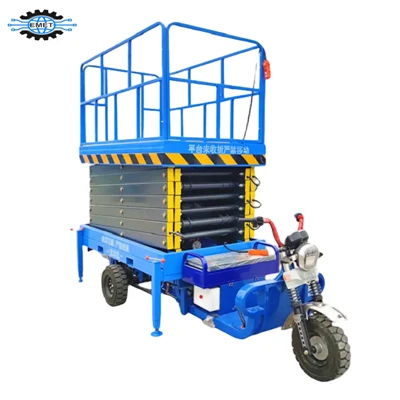
- Scissor Lifting Platform: With scissor type structure and it is divided into fixed, movable, and vehicle mounted types.
- Aluminum Alloy Column Type: Mast column structure, single column/double column/multi mast column.
- Guide Rail Lifts: Vertical lifting is provided by rails and chain system.
- Self-propelled Arm Work Platform: It adopts a multi-stage folding arm or telescopic arm combination design, electric or diesel drive, and can be self-propelled.
Advantages of eMET Handling machines
Design & Customize Handling Solutions
EMET will design and customize corresponding handling solutions according to the actual site and application needs of the customer.
One-Stop Service
EMET can almost equip all the handling tools and machines, which can save customers procurement time.
Quality & Safety
All accessories of the products are selected from well-known domestic and foreign brands, and the overall performance of the machine has reached the international advanced level.
Product Test
All have passed safety and performance testing, not limited to factory testing (some including third-party laboratory testing)
Application of Handling Equipment
Warehouse Daily Operations
Supports efficient goods handling, stacking and storage management to maximize the utilization of warehouse space.
Factory Production Line Logistics
Facilitates the quick transfer of raw materials and finished products between production processes to keep the production line running smoothly.
Logistics Distribution Center Sorting
Streamlines the loading, unloading and sorting of bulk goods to shorten the turnover cycle of express and freight items.
Retail Inventory Replenishment
Assists in the transportation and shelving of bulk commodities to ensure the timeliness of store inventory supply.
Industrial Equipment Maintenance
Provides stable support for high-altitude maintenance operations to improve the safety and efficiency of equipment overhaul.
Cold Storage & Refrigerated Warehouse Work
Adapts to low-temperature environments to complete the handling and stacking of frozen food, fresh products and other cold-chain goods.
Construction Site Material Transfer
Handles the transportation of building materials such as pipes and plates to meet the material demand of on-site construction.
Port & Cargo Terminal Handling
Assists in the transfer of containerized and palletized goods to speed up the loading and unloading efficiency of ships and vehicles.
E-commerce Fulfillment Center Operations
Matches the high-frequency goods handling needs of e-commerce warehouses to ensure the rapid delivery of online orders.
Heavy Industry Component Handling
Bears the transportation of heavy industrial parts to reduce the difficulty of manual handling of large and heavy items.
How to Choose Handling Equipment
· Assess Load-Bearing Capacity
Choose equipment rated to withstand your typical cargo weight (and a safe margin) to ensure safe and stable handling of industrial goods.
· Verify Stable Operation Performance
Prioritize models with robust structural design and anti-slip components to maintain smooth movement even under full load.
· Prioritize Ergonomic Design
Opt for equipment with a humanized operation interface and comfortable grips to reduce operator fatigue during long working hours.
01
· Match Versatile Application Scenarios
Select equipment compatible with your work venues (warehouses, factories, logistics centers) to meet pallet handling, stacking and height adjustment needs.
· Check Durable Material Selection
Choose products made of high-quality steel and wear-resistant parts for better corrosion resistance and longer service life.
· Evaluate Precise Control System
Pick equipment with sensitive steering and lifting controls to enable accurate goods positioning and improve handling efficiency.
02
· Confirm Safety Protection Mechanisms
Ensure the equipment is equipped with overload protection, emergency stop buttons and anti-tilt devices to eliminate potential operational hazards.
· Consider Low Noise Operation
For noise-sensitive environments, select models with optimized transmission structures and silent components to maintain a quiet workspace.
· Check Easy Maintenance & Upkeep
Choose equipment with simplified structures and easily accessible parts to lower daily maintenance difficulty and costs.
03
· Compare Energy-Efficient Configuration
For electric models, prioritize high-capacity batteries and energy-saving motors to ensure longer working hours with low energy consumption.
· Evaluate Compact & Space-Saving Design
In narrow warehouses or aisles, select sleek models that can maneuver easily to maximize space utilization.
· Check Adjustable Working Parameters
Choose equipment with adjustable lift height and moving speed to adapt to different stacking and handling requirements.
04
· Prioritize Anti-Skid & Anti-Collision Design
Opt for models with anti-skid platforms and collision avoidance buffers to protect both the equipment and your cargo from damage.
· Verify Wide Adaptability to Ground Conditions
For uneven floors, select equipment with sturdy wheels and shock-absorbing components to ensure stable operation.
· Confirm Certified Quality Assurance
Only choose equipment that complies with international industrial standards and has passed strict quality inspections for reliable performance.
05
Maintenance of Handling Equipment
Regular Cleaning & Dust Removal
Clean the equipment body, wheels, control components and load-bearing parts regularly to remove dust, debris and oil stains that may affect operation.
Lubrication of Moving Parts
Apply appropriate lubricating oil to hinges, gears, axles and other moving parts on a scheduled basis to reduce friction and prevent wear.
Load-Bearing Structure Inspection
Check load-bearing components such as forks, platforms and frames regularly for deformation, cracks or loose fasteners to ensure safe load capacity.
Control System Calibration
Calibrate steering, lifting and braking controls periodically to maintain sensitivity and accuracy, avoiding operational delays or failures.
Battery Maintenance (Electric Models)
Keep batteries fully charged, avoid over-discharging and clean battery terminals regularly to extend battery life and ensure stable power supply.
Wheel & Tire Inspection
Inspect wheels for wear, damage or air leakage (for pneumatic tires) and replace worn parts in a timely manner to ensure stable movement.
Our Factory
We have a complete factory production, quality supervision and delivery.


Ultimate FAQ Guide to Handling Equipment
Q1: What is the maximum load-bearing capacity of general handling equipment?
A1: There will be significant differences in the load-bearing capacity of different handling tools, and the fully electric version usually has a smaller load-bearing capacity. It is recommended to choose equipment that matches the actual weight of the goods, with a safety margin of 10% -20%.
Q2: Can handling equipment be used in narrow warehouse aisles?
A2: Yes. There are compact handling equipment designed for narrow spaces, which can flexibly maneuver in aisles with a width of 1.5 meters to 2 meters, maximizing space utilization.
Q3: How often should handling equipment be lubricated?
A3: It is recommended to lubricate moving parts (gears, axles, hinges) every 200 hours of operation or once a week, depending on the frequency of use and working environment.
Q4: Is handling equipment suitable for outdoor use?
A4: Some models are suitable. Choose equipment with waterproof, dustproof and anti-slip designs for outdoor use, and avoid using it on uneven or muddy ground for a long time.
Q5: What should I do if the handling equipment has abnormal noise during operation?
A5: Stop using it immediately. Check for loose fasteners, lack of lubrication or worn parts, and repair or replace the faulty components before restarting to avoid further damage.
Q6: How long is the service life of handling equipment?
A6: Under normal use and regular maintenance, the service life is usually 5-8 years. The service life will be affected by working intensity, maintenance quality and operating environment.
Q7: Can electric handling equipment work continuously for a whole day?
A7: Yes. High-capacity battery models can work continuously for 8-10 hours after full charge. It is recommended to prepare a spare battery for long-hour operation scenarios.
Q8: What safety devices do handling equipment usually have?
A8: Common safety devices include overload protection, emergency stop button, anti-tilt device, anti-collision buffer and brake system to ensure operational safety.
Q9: How to maintain the battery of electric handling equipment?
A9: Keep the battery fully charged, avoid over-discharging, clean the terminals regularly to prevent corrosion, and store it in a dry environment when not in use for a long time.
Q10: Can handling equipment be customized according to specific needs?
A10: Yes. Manufacturers can provide customized services such as load-bearing capacity, lift height and special environmental adaptation (low temperature, corrosion resistance) according to user needs.
Q11: What kind of ground is suitable for handling equipment?
A11: Flat, hard ground (concrete, asphalt) is preferred. For uneven ground, choose equipment with shock-absorbing wheels to ensure stable operation.
Q12: Do operators need professional training to use handling equipment?
A12: Yes. Operators should receive training on equipment operation, safety precautions and simple maintenance to avoid operational errors and safety hazards.
Q13: How to deal with hydraulic system leakage of handling equipment?
A13: Stop using it immediately, turn off the power supply, and check the leakage point. Replace worn seals or hoses in a timely manner, and refill hydraulic oil after repair.
Q14: Can handling equipment be used in cold storage (below 0℃)?
A14: Yes. Select handling equipment specially designed for low-temperature environments, which is equipped with low-temperature-resistant batteries, lubricants and seals to adapt to cold storage conditions.
Q15: What is the difference between manual and electric handling equipment?
A15: Manual equipment is suitable for light load and short-distance use with low cost, while electric equipment has higher efficiency, lower labor intensity and is suitable for heavy load and long-hour operation.
Q16: How often should a comprehensive inspection of handling equipment be carried out?
A16: Conduct a weekly routine inspection and a monthly comprehensive inspection, including load-bearing structure, control system, safety devices and electrical components.
Q17: What should I pay attention to when storing handling equipment for a long time?
A17: Clean the equipment thoroughly, apply lubricant to moving parts, fully charge the battery (for electric models), and store it in a dry, well-ventilated area away from moisture and corrosion.
Q18: Can handling equipment lift goods vertically to a high height?
A18: Yes. Corresponding models can lift goods to a height of 2 meters to 10 meters, which is suitable for high-rack storage and high-altitude operation scenarios.
Q19: What are the common faults of handling equipment?
A19: Common faults include battery power loss, hydraulic system leakage, abnormal noise, insensitive control and worn wheels, most of which can be avoided by regular maintenance.
Q20: How to choose the right handling equipment for logistics distribution centers?
A20: Prioritize equipment with high efficiency, stable operation and strong adaptability, considering load-bearing capacity, operation speed and compatibility with sorting and loading/unloading scenarios.