



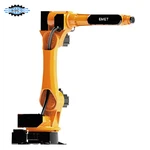

Pneumatic Machine
Why Choose HEBEI EMET MACHINERY & TECHNOLOGY CO., LTD?
Our company is a mechanical manufacturing enterprise, formerly a lifting machinery manufacturing factory, established in 2005. Located in Qingyuan District, Baoding City, Hebei Province, China, known as the hometown of lifting machines, covering an area of 3200 square meters, with advanced production equipment and a comprehensive quality management system, we are committed to providing customers with high-quality mechanical manufacturing services.
Professional Technical Team
We have a highly skilled team with strong technical strength and over 100 experienced employees. We insist on continuous innovation and have a series of independently developed precision manufacturing technologies and equipment.
Wide Range of Products
Our products cover various mechanical equipment, such as anti fall devices, electronic scales, manipulator arms, etc; At the same time, we can also customize production according to customer needs.
Quality Assurance
We strictly follow the requirements of the ISO9001 quality management system for production, and all products have passed CE certification, with a high market share.At the same time, we also have advanced production lines to provide customers with high-quality mechanical equipment.
Professional Service
We provide excellent after-sales service, track usage, and provide positive feedback. We will respond quickly within 24 hours and provide customers with solutions.

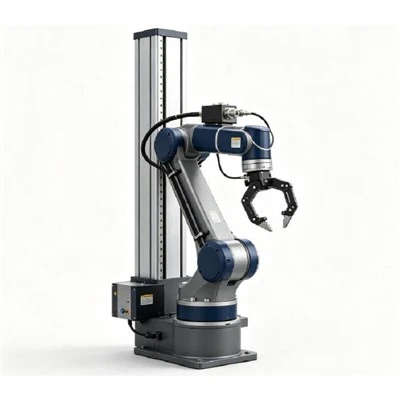


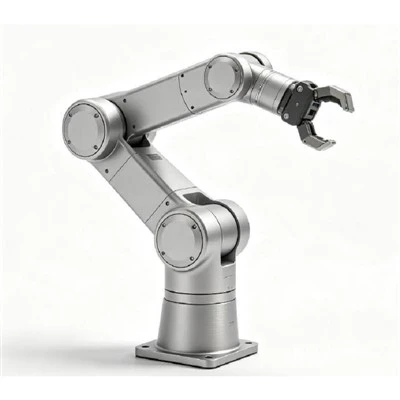


What is Pneumatic Machine?
Pneumatic manipulator arm is a labor-saving equipment used for material handling and installation. It utilizes the balance principle of mechanical and pneumatic valves, allowing the operator to push and pull the heavy object accordingly, allowing for balanced movement and positioning in space. When a heavy object forms a floating state during lifting or lowering, the distribution valve ensures zero operating force, but the operating force is affected by the weight of the workpiece.
Pneumatic manipulator arm mainly completes actions such as gripping, reloading, flipping, assembling, lifting, and docking of workpieces. It can be quickly positioned and operated frequently, making it an ideal lifting equipment.

Features of Pneumatic Machine
Working without gravity
The entire process has floating function, and the machine is capable of working without gravity.
Protection functions
- Gas cut off protection, ensuring that the workpiece will not fall when suddenly cut off;
- Misoperation protection, if the landing is not detected, the workpiece cannot be released;
- Warning protection, which can monitor work pressure in real time and reduce risks;
Continuously variable transmission (CVT)
It can automatically adjust the optimal transmission ratio according to different working conditions, thereby improving power performance while reducing noise and vibration.
Large air storage tank
Equipped with an air storage tank, it can operate normally within ten minutes of the machine being cut off.
Main parts of Pneumatic Machine
1. Arm host: The main device that enables materials (or workpieces) to achieve 3D motion in the air.
2. Grasping fixture: a device that enables material (or workpiece) grasping and meets the corresponding handling and assembly requirements of users.
3. Execution part: Pneumatic components, hydraulic devices or motors
4. Air path control system: a control system that achieves the motion status of the entire device of the manipulator arm host and grasping fixture,
Rigid manipulator arm
MA Series rigid manipulator arm is capable of lifting workpieces of various shapes. The equipment can be fixed on the ground, suspended and fixed, or moved by guide rails.
Cable driven manipulator arm
The Cable driven manipulator is used in combination with the rigidity of the folding arm and the flexibility of the rigid manipulator arm. The steel wire rope follows the robotic arm and uses the pneumatic balance suspension to pull the steel wire rope to lift the workpiece. This allows it to have less operating force, faster operating speed, and achieve the goal of "floating" within the range of travel.
Pillar mounted jib crane
This type jib crane can be fixed on the ground and consists of a column, cantilever, electric hoist, and control system. Columns are usually composed of steel structures with sufficient stability and load-bearing capacity. Cantilever is a crossbeam connected to a column, used to carry electric hoists and hooks. Electric hoists can be manual or electric, used for lifting and hanging materials. The control system is used to control the operation of the jib crane and the movement of the electric hoist.
Wall mounted jib crane
Wall mounted jib crane are usually made of steel structure and can be installed on the wall with sufficient stability and load-bearing capacity. It is a new type of material lifting machine developed on the basis of column mounted cantilever crane. The walking track of the machine is installed on the cement columns or load-bearing beams of the factory building. Circularly move around the cement column, while the pneumatic hoist can also perform lateral movement along the selected cantilever and vertical lifting.
Portable articulated jib crane
The Portable Articulated Jib Crane is equipped with wheels, which not only has the characteristics of a column type jib crane, but also allows for flexible movement and replacement of lifting stations, making it more adaptable. It is a necessary separate emergency lifting machine for efficient automatic production lines.
Folding jib crane
The Folding Jib crane has the characteristics of novel structure, flexible extension and bending, easy operation, and high efficiency and energy conservation. It can be used with a pneumatic balance crane, utilizing the bending and rotating motion of the crossbeam to avoid objects in the controlled working area and maximize the working area.
Advantages of Manipulator Arm

Easy and fast operation
It can follow the traction force of the operator to complete actions such as lifting, pushing, rolling, tilting, etc. of the workpiece, easily transporting the workpiece, and assisting in the assembly of the workpiece. This design makes the operation process simple and fast, greatly improving work efficiency.

Accurate positioning
In the zero gravity suspension state, the pneumatic machine can ensure precise positioning of random movement during product docking, which is particularly important for industrial production processes that require precise control.

Suspension without impact and rebound force:
During product assembly, the pneumatic machine can provide flexible docking, avoiding the impact and rebound force of ordinary lifting machine during operation, thereby protecting the safety of the product and operators.

security and reliability
The pneumatic machine adopts a pneumatic control system composed of imported high-quality pneumatic components, which is equipped with safety mechanisms such as air source accidental interruption protection, misoperation protection, low pressure alarm, safety follower butterfly brake, buffer air tank, etc., to maximize the protection of operation and workpiece safety.
Application of Pneumatic Machine
EMET Provides Hoisting and Transportation Solution


How to Choose Pneumatic Machine
It is necessary to choose a rigid pneumatic manipulator arm in the following situations:
when there is torque generated, it is not possible to use a pneumatic balance hoist or a soft cable manipulator arm;
The center of gravity of the workpiece is away from the arm suspension point, or the workpiece needs to be flipped or tilted;
The height of the factory building is limited.
Cable driven manipulator arm
Due to the dual joints of the cable driven manipulator arm to achieve horizontal displacement and a working radius of up to 3000mm, it has more flexible operation and faster speed than pneumatic balance cranes. Suitable for situations where the workpiece is lightweight but the handling cycle is very fast. Due to the use of steel wire ropes for lifting the cable driven manipulator arm , the center of gravity of the workpiece must be located directly below the steel wire rope.
Pillar mounted jib crane
It is equipped with reliable pneumatic hoists or pneumatic jib cranes, especially suitable for short distance, frequent use, and intensive lifting operations. It has the characteristics of high efficiency, energy saving, trouble saving, small footprint, easy operation and maintenance, etc
Wall mounted cantilever crane
The main advantage of wall mounted cantilever crane is that it can be installed on walls, does not occupy floor space, and can provide larger operating space. It is suitable for occasions that require space saving and greater operational space, such as factory workshops, warehouses, etc.
Portable Articulated Jib Crane
The main advantage of a portable articulated jib crane is its flexibility, which allows it to move between different work areas as requirements. It is suitable for situations that require frequent changes in work locations, such as construction sites, loading and unloading sites, etc.
Folding jib crane
It is suitable for production or maintenance situations in industries such as mechanical manufacturing, railway, chemical, and light industry. Especially in production lines with dense equipment, short distance lifting, and frequent operations, the application of this product can improve production efficiency.
Regular Cleaning: Regular cleaning is key to keeping your pneumatic machines up and running. Use a clean rag and a suitable detergent to wipe the exterior surfaces of the arm to remove dust, dirt and oil. At the same time, make sure that the cleaning agent does not have a corrosive effect on the arm components.
Lubrication and Maintenance: The joints and moving parts of the arm require regular lubrication and maintenance. Use appropriate oil or grease to lubricate critical parts to reduce wear and friction. At the same time, check whether the fasteners are loose and tighten them as necessary. Make sure that the moving parts of the robotic arm remain flexible and smooth.
Inspection of Sensors and Cables: The sensors and cables of the arm are an important part of maintaining proper operation. Periodically check that the sensor is working properly and that the cable is not frayed or damaged. Replace damaged cables if necessary, and make sure the connections are secure.
Update of Programming and Control System: With the continuous development of technology, the programming and control system of the arm also needs to be updated regularly. Install the latest software and firmware versions to ensure maximum performance and functionality of the arm.
Training and Operating Procedures: Provide operators with appropriate training and operating procedures to ensure that they understand the correct use of the arm and safe operating specifications. Proper operation and maintenance can maximize the life of the arm.
Working Principle of Pneumatic Machine
The Pneumatic Manipulator Arm can automatically identify whether there is a load on the arm by detecting the suction cup or the end fixture of the arm and the gas pressure inside the balance cylinder, and automatically adjust the air pressure inside the balance cylinder through the pneumatic logic control circuit to achieve automatic balance. When working, the heavy object seems to be suspended in the air, which can avoid collision during product docking. Within the working range of the manipulator arm, the operator can easily move it back, forth, left, right, up and down to any position, and the operator can operate it easily. At the same time, the pneumatic circuit also has interlocking protection functions such as preventing misoperation and pressure loss protection. The pneumatic manipulator arm does not require an electronic control system, only compressed air and vacuum source can work, which is very convenient.
Our Customers
Our customers are from various industries from all over the world


Ultimate FAQ Guide to Pneumatic Machine
Q: What is a pneumatic machine?
Q: What is the purpose of a pneumatic machine?
Q: What are the types of pneumatic machines?
Q: What is a hydraulic manipulator arm?
Q: What is a pneumatic manipulator arm?
Q: What is an electric manipulator arm?
Q: What are the components of a manipulator arm?
Q: What is the range of motion of a manipulator arm?
Q: How does a manipulator arm work?
Q: How do I program a manipulator arm?
Q: What types of end effectors are available for manipulator arms?
Q: How does the control system of a pneumatic machine work?
Q: What types of control systems are available for pneumatic machines?
Q: What are the advantages of using a pneumatic machine?
Q: What are the limitations of using a pneumatic machine?
Q: What applications are suitable for pneumatic machines?
Q: What safety precautions should be taken when using a pneumatic machine?
Q: What factors should be considered when choosing a pneumatic machine?
Q: How do I install a pneumatic machine?