

Hey there! As a supplier of folding jib cranes, I often get asked if these cranes can be used in a corrosive environment. It's a valid question, especially considering that many industrial settings involve exposure to substances that can eat away at metal over time. So, let's dive right in and explore this topic.
First off, let's understand what a folding jib crane is. A folding jib crane is a type of lifting equipment that consists of a jib, or boom, that can be folded for easy storage or transportation. It's a versatile piece of machinery that can be used in a variety of applications, from small workshops to large industrial facilities. You can check out our Light Duty Jib Crane and Portable Articulated Jib Crane for more options.
Now, let's talk about corrosive environments. Corrosive environments are places where there are substances like acids, alkalis, salts, or moisture that can cause metal to corrode. This corrosion can weaken the structure of the crane, leading to safety issues and reducing its lifespan. Some common examples of corrosive environments include chemical plants, food processing facilities, and coastal areas where there's a lot of salt in the air.
So, can a folding jib crane be used in a corrosive environment? The short answer is yes, but with some important considerations.
Material Selection
The first thing to consider is the material of the crane. Most folding jib cranes are made of steel, which is strong and durable but prone to corrosion. However, there are different types of steel that can be used to increase the crane's resistance to corrosion.
Stainless steel is a popular choice for corrosive environments. It contains chromium, which forms a thin layer of oxide on the surface of the metal, protecting it from rust and corrosion. Stainless steel is resistant to a wide range of corrosive substances, making it suitable for use in chemical plants and food processing facilities.
Another option is galvanized steel. Galvanizing is a process where a layer of zinc is applied to the surface of the steel. The zinc acts as a sacrificial anode, corroding in place of the steel and providing protection against rust. Galvanized steel is commonly used in outdoor applications, such as coastal areas, where there's a high risk of corrosion from saltwater.
Coating and Painting
In addition to using corrosion-resistant materials, applying a protective coating or paint to the crane can further enhance its resistance to corrosion. There are different types of coatings available, each with its own advantages and disadvantages.
Epoxy coatings are a popular choice for industrial applications. They are tough, durable, and provide excellent protection against chemicals and moisture. Epoxy coatings can be applied in multiple layers to increase the thickness of the protective barrier.
Polyurethane coatings are another option. They are known for their high gloss finish and excellent UV resistance, making them suitable for outdoor applications. Polyurethane coatings also provide good protection against abrasion and corrosion.
It's important to note that the coating or paint needs to be applied correctly to ensure maximum protection. Any scratches or damage to the coating can expose the underlying metal to corrosion, so regular inspections and maintenance are essential.
Design Considerations
The design of the folding jib crane can also play a role in its suitability for a corrosive environment. For example, the crane should be designed to minimize the accumulation of moisture and debris, which can accelerate corrosion. This can be achieved by using sloped surfaces and drainage holes.
In addition, the joints and connections of the crane should be designed to prevent the entry of corrosive substances. Sealed bearings and gaskets can be used to protect the moving parts of the crane from corrosion.
Maintenance and Inspection
Regardless of the material, coating, or design of the folding jib crane, regular maintenance and inspection are crucial for its long-term performance in a corrosive environment. This includes cleaning the crane regularly to remove any dirt, debris, or corrosive substances that may have accumulated on the surface.
Inspections should be carried out at regular intervals to check for signs of corrosion, such as rust, pitting, or flaking paint. Any damaged or corroded parts should be replaced immediately to prevent further damage to the crane.
Case Studies
Let's take a look at some real-world examples of folding jib cranes being used in corrosive environments.
In a chemical plant, a folding jib crane made of stainless steel was installed to lift and move chemical containers. The stainless steel construction provided excellent resistance to the corrosive chemicals in the plant, and the crane has been in operation for several years without any major issues.
In a food processing facility, a galvanized folding jib crane was used to handle food products. The galvanized coating protected the crane from the moisture and acids present in the food processing environment, and regular maintenance ensured its continued performance.
Other Options
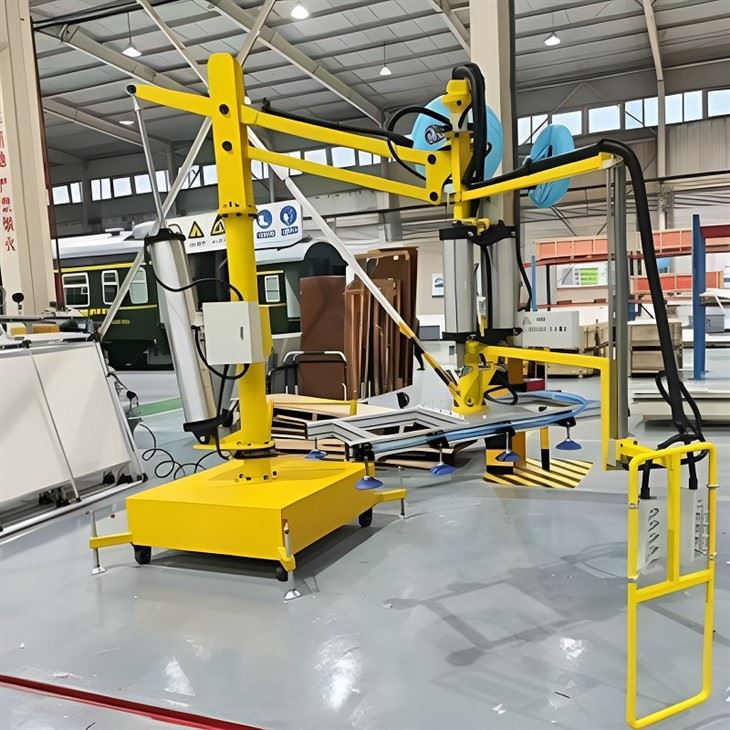
If you're working in a particularly harsh corrosive environment, you might also consider other types of lifting equipment, such as our Pneumatic Manipulator Arm. Pneumatic manipulator arms are made of materials that are highly resistant to corrosion and can be a great alternative in some situations.

Conclusion
So, to sum it up, a folding jib crane can be used in a corrosive environment, but it requires careful consideration of the material, coating, design, and maintenance. By choosing the right materials, applying a protective coating, designing the crane to minimize corrosion, and carrying out regular maintenance and inspections, you can ensure that your folding jib crane will perform reliably in a corrosive environment for many years to come.
If you're interested in learning more about our folding jib cranes or have any questions about using them in a corrosive environment, feel free to reach out to us. We're here to help you find the right lifting solution for your needs.
References
- ASM Handbook, Volume 13A: Corrosion: Fundamentals, Testing, and Protection
- Corrosion Engineering Handbook, Fourth Edition by Pierre R. Roberge
- "Corrosion Prevention and Control in Industrial Environments" by the National Association of Corrosion Engineers (NACE)


