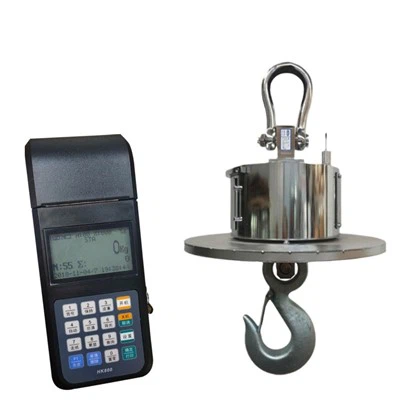
When it comes to industrial weighing solutions, crane scales play a pivotal role in accurately measuring the weight of heavy loads. As a leading supplier of crane scales, I often encounter questions about various aspects of these devices, and one query that frequently surfaces is about the data storage capacity of a crane scale. In this blog, I will delve into this topic, shedding light on what data storage capacity means in the context of crane scales, its significance, and factors influencing it.
Understanding Data Storage Capacity in Crane Scales
Data storage capacity refers to the amount of data that a crane scale can hold within its internal memory. This data typically includes weight measurements, timestamps, identification numbers of the loads, and sometimes additional information such as the operator's ID. Just like any other digital device, a crane scale with a larger data storage capacity can retain more historical weighing data.
For instance, consider a busy shipping yard where numerous containers are being weighed daily. A crane scale with a limited data storage capacity may quickly run out of space to store new weight measurements. On the other hand, a scale with a large capacity can store weeks or even months of weighing data, allowing for comprehensive record - keeping and analysis.
Significance of Data Storage Capacity
Record - Keeping and Compliance
In many industries, accurate record - keeping is not just a good practice but a regulatory requirement. For example, in the food and pharmaceutical industries, strict regulations govern the weighing of raw materials and finished products. A crane scale with sufficient data storage capacity enables companies to maintain detailed records of all weight measurements, which can be crucial for audits and compliance.

Process Analysis
Historical weighing data stored in a crane scale can provide valuable insights into a company's operations. By analyzing the weight trends over time, businesses can identify inefficiencies, detect anomalies, and optimize their processes. For example, if there is a sudden increase in the weight of a particular product, it could indicate a problem in the production line, such as over - filling or the addition of extra components.
Traceability
In the event of a quality issue or a product recall, having access to detailed weighing data is essential for traceability. A crane scale with a large data storage capacity can store information about the weight of each individual item or batch, allowing companies to track the movement of products through the supply chain and identify the source of the problem.
Factors Influencing Data Storage Capacity
Memory Technology
The type of memory used in a crane scale is a significant factor in determining its data storage capacity. Modern crane scales often use flash memory, which is non - volatile, meaning it retains data even when the power is turned off. Flash memory comes in different capacities, and higher - end crane scales may be equipped with larger flash memory modules to accommodate more data.
Data Format and Compression
The way data is formatted and stored in the crane scale also affects its storage capacity. Some crane scales use advanced data compression techniques to reduce the amount of space required to store each weight measurement. For example, instead of storing the full numerical value of a weight measurement, the scale may store a compressed representation that can be decompressed when needed.
User - Configurable Settings
Some crane scales allow users to configure the amount of data to be stored for each measurement. For example, a user may choose to store only the weight value and the timestamp, or they may opt to store additional information such as the load ID, operator ID, and the location of the weighing. By reducing the amount of data stored per measurement, users can effectively increase the number of measurements that can be stored in the scale's memory.
Different Types of Crane Scales and Their Data Storage Capacities
Portable Digital Hanging Scale
Portable digital hanging scales are designed for lightweight and medium - weight applications. These scales are often used in industries such as fishing, agriculture, and small - scale manufacturing. Due to their compact size and lower cost, they typically have a relatively limited data storage capacity, usually ranging from a few hundred to a few thousand weight measurements.

Hanging Weighing Scale 1000kg
Hanging weighing scales with a capacity of 1000kg are commonly used in industrial settings where heavier loads need to be weighed. These scales may have a larger data storage capacity compared to portable digital hanging scales, as they are often used in more demanding applications where record - keeping is crucial. They can typically store several thousand to tens of thousands of weight measurements.
Wireless Crane Scale
Wireless crane scales offer the advantage of remote operation and data transfer. These scales are often used in large - scale industrial operations, such as construction sites and shipping ports. Many wireless crane scales are equipped with advanced data storage capabilities, allowing them to store a large amount of weighing data. Some high - end wireless crane scales can store hundreds of thousands of weight measurements, making them suitable for long - term data collection and analysis.
Managing Data Storage in Crane Scales
Regular Data Transfer
To ensure that the crane scale's data storage capacity is not exceeded, it is important to regularly transfer the stored data to an external device, such as a computer or a server. Most modern crane scales support data transfer via USB, Bluetooth, or Wi - Fi, making it easy to download the data for further analysis.
Data Deletion
If the crane scale's memory is running out of space, users can delete old or unnecessary data. However, it is important to ensure that any data deleted is no longer needed for record - keeping, compliance, or analysis purposes.
Conclusion
The data storage capacity of a crane scale is an important consideration when choosing a weighing solution for your business. A scale with a sufficient data storage capacity can help you maintain accurate records, analyze your processes, and ensure compliance with industry regulations. At our company, we offer a wide range of crane scales with different data storage capacities to meet the diverse needs of our customers.

If you are interested in learning more about our crane scales or have specific requirements for your weighing application, we encourage you to contact us for a detailed discussion. Our team of experts is ready to assist you in selecting the right crane scale for your business and answering any questions you may have.

References
- Crane Scale Handbook, Industrial Weighing Solutions Inc.
- Data Storage in Digital Devices, Technology Review Journal
- Regulatory Requirements for Weighing in the Food Industry, Food Safety Authority