



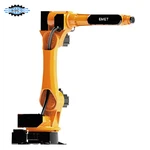

Laser Robot
Why Choose HEBEI EMET MACHINERY & TECHNOLOGY CO., LTD?
Our company is a mechanical manufacturing enterprise, formerly a lifting machinery manufacturing factory, established in 2005. Located in Qingyuan District, Baoding City, Hebei Province, China, known as the hometown of lifting machines, covering an area of 3200 square meters, with advanced production equipment and a comprehensive quality management system, we are committed to providing customers with high-quality mechanical manufacturing services.
Professional Technical Team
We have a highly skilled team with strong technical strength and over 100 experienced employees. We insist on continuous innovation and have a series of independently developed precision manufacturing technologies and equipment.
Wide Range of Products
Our products cover various mechanical equipment, such as anti fall devices, electronic scales, manipulator arms, etc; At the same time, we can also customize production according to customer needs.
Quality Assurance
We strictly follow the requirements of the ISO9001 quality management system for production, and all products have passed CE certification, with a high market share.At the same time, we also have advanced production lines to provide customers with high-quality mechanical equipment.
Professional Service
We provide excellent after-sales service, track usage, and provide positive feedback. We will respond quickly within 24 hours and provide customers with solutions.


What is Laser Robot?
A Laser Robot refers to a robotic system that incorporates laser technology for various applications. The term can encompass different types of robots that utilize lasers either as a tool or as a sensing mechanism.

Features of Laser Robot
Precision Cutting or Welding
High Accuracy: Laser robots are known for their ability to perform precise cutting or welding tasks with a high level of accuracy.
Fine Detail: They can handle intricate designs and fine details, making them suitable for applications that demand precision.
Versatility
Material Compatibility: Laser robots can be versatile in working with various materials, including metals, plastics, and wood, offering flexibility in manufacturing processes.
Programmability: The versatility extends to programmability, allowing the robot to adapt to different cutting or welding requirements.
Speed and Efficiency
Fast Processing: Laser robots often operate at high speeds, contributing to efficient production processes.
Reduced Downtime: The quick and precise nature of laser operations minimizes downtime, enhancing overall manufacturing efficiency.
Non-Contact Process
Minimal Distortion: In laser welding, the non-contact nature of the process results in minimal distortion and stress on the materials being joined.
Clean Cuts: Laser cutting, being a non-contact process, produces clean and precise cuts without the need for additional finishing.
Automation Integration
Industrial Automation: Laser robots seamlessly integrate into automated manufacturing systems, contributing to streamlined and continuous production.
Robotic Cells: They can be part of robotic cells where multiple robots work collaboratively in a synchronized manner.
Safety Measures
Safety Systems: Laser robots are equipped with safety features, including sensors and interlocks, to ensure safe operation and prevent accidents.
Operator Protection: Measures are in place to protect human operators from potential hazards associated with laser technology.


Laser Sensing and Navigation
LiDAR Integration: In robots using lasers for sensing, features like LiDAR integration enable accurate environmental mapping and navigation.
Obstacle Avoidance: Laser sensors help robots detect obstacles in real-time, allowing for dynamic path adjustments to avoid collisions.
Adaptability
Flexible Configurations: Laser robots come in various configurations, allowing for customization based on specific application requirements.
Upgradability: Modular designs facilitate easy upgrades and adaptations to evolving manufacturing needs.
Energy Efficiency
Focused Energy: Laser technology allows for the precise concentration of energy, leading to energy-efficient cutting or welding processes.
Reduced Material Waste: The accuracy of laser operations minimizes material waste, contributing to sustainability.
Types of Laser Robot
Laser Cutting Robots
Definition: Laser cutting robots are robotic systems equipped with laser cutting tools. These robots are used for precision cutting of materials such as metal, plastic, or wood.
High Precision: Laser cutting robots offer high precision in cutting, allowing for intricate and detailed patterns.
Versatility: They can be programmed to cut different materials, making them versatile for various industries.
Speed: Laser cutting is often faster than traditional cutting methods, contributing to efficient manufacturing processes.
Laser Welding Robots
Definition: Laser welding robots use lasers as a heat source for welding materials together. They are employed in industries where precise and efficient welding is required.
Accuracy: Laser welding provides precise control over the welding process, resulting in high-quality welds.
Non-Contact Process: Since lasers are non-contact tools, there is minimal physical stress on the materials being welded.
Automation: Laser welding robots can be integrated into automated manufacturing systems for continuous and consistent welding.
Laser Sensing Robots
Definition: Some robots use lasers as part of their sensing and navigation systems. Laser sensors, such as LiDAR (Light Detection and Ranging), can be integrated into robots for environmental mapping, obstacle detection, and navigation purposes.
Mapping: Laser sensors can create detailed maps of the robot's surroundings, aiding in navigation and path planning.
Obstacle Avoidance: Laser sensing helps robots detect obstacles in their path and adjust their movements accordingly.
Navigation: Robots equipped with laser sensors can navigate complex environments with a high level of autonomy.
Technological Advantages
Robot technology is advancing significantly and robotic laser cutting machines are not exceptions. They are capable of pushing automobile industry forward. One can get high speed with accuracy and repeatability of expensive CNC laser cutting machines but without a high cost, high and low flexibility which is the main drawback of CNC laser cutting machines.
Save Power and Can Cut Any Material
A traditional cutter consumes minimum 50 kW power in total, but robotic laser cutting machines consume very low power. Also, robotic laser cutting machines can cut any strength of material provided the melting point of the material is low.
Safe
In traditional cutting machines large blades move up and down with very high speed and don’t have safety features. One’s hand can be easily get caught in it. While robotic laser cutters do not require human beings to operate it. Hence, there is no possibility of anyone to get injured.
Flexible to Operate
One need to invest a heavy amount on traditional cutters as they have different shaped tools required to be fitted in specifically designed parts. If you wish to make a change in any dimension, it is not possible. You have to buy a new tool and replace the previous one with it. Though the tools are not that much expensive, their maintenance cost is high because it has to be done by an expert on a regular basis. On the other hand, robotic laser cutting machines do not require physical maintenance. The changes can be made in dimensions by simply reprogramming it which requires very less time and the expenses are also very low.
Cutting Capability
Most modern, this means that Robotic laser cutters can achieve very high precision and can cut at exceptionally high speed. Due to this property, robotic laser cutting is very useful for any type of cutting which needs more accuracy or which is more complex. Also, they can cut thicker materials and are most efficient cutters amongst traditional laser, plasma, oxyfuel and robotic laser cutting.
Application of Laser Robot
Robot Navigation
Laser measurement sensors can scan the surrounding environment to obtain distance and position information of objects in the environment. Based on this information, the robot can generate maps to plan paths and avoid obstacles. This is critical in fields such as industrial automation, logistics transportation and service robotics.
Robot Control
The laser measurement sensor can help the robot determine its own position and attitude by measuring the distance and angle between the robot and the target object, so as to achieve precise positioning and attitude control, so that the robot can accurately perform tasks in complex environments. It can be used for automated assembly and processing in black light factories, etc.
Robot Vision
Laser line projection can provide structured light for the vision system, help the camera accurately capture and obtain the three-dimensional shape of the object, and can be used for robots to grab workpieces and product inspections.
How to Choose Laser Robot
Evaluate whether the robot is compatible with your current production setup, including conveyors, workstations, and auxiliary equipment. You’ll want to be sure of how you’ll get parts to the robot and what length of reach your chosen robot needs to have. If you want the robot to directly interface with surrounding equipment, such as your existing laser source or a conveyor for controlling the flow of parts.
Choose a robot that offers user-friendly software, ideally with visual programming options that simplify the creation of intricate cutting paths and patterns. You’ll want to make sure your team can program the robot and calibrate the cuts, rather than have to hire a consultant programmer every time your production line changes.
The end-effector, meaning the tool attached to the robot, is the bridge between the robot and the material being cut. If you’re a high-mix shop, opt for a robot that supports a variety of end-effectors, allowing you to effortlessly switch between different cutting tools based on material type, thickness, and intricacy of cuts. Consider robots that offer quick-change mechanisms for end-effectors, reducing downtime and maximizing versatility.
Maintenance of Laser Robot


Cleaning the Laser Cutting Machine
Regularly clean the exterior of the laser cutting machine to keep it free from dust and debris, preventing any interference with its normal operation. Pay special attention not to wipe the area near the laser cutting head during cleaning to maintain cutting quality.
Machine Bed and Rails Maintenance
Maintain machining accuracy by ensuring the linear guides of the machine bed have high guiding precision and smooth motion. Periodically check if the X, Y, Z axes can return to the origin and inspect the rails’ straightness and the machine’s perpendicularity. If there’s an issue with axis return, check the origin switch position and perform timely maintenance and debugging. Clean oil stains and foreign objects on the rack and rails by opening the dust cover. Use diesel for cleaning, then move the machine bed to flush out debris inside the slider. After cleaning, wipe off excess diesel and apply a layer of gear lubricating oil.
Inspection of the Transmission System
Regularly inspect the transmission system, including motors and gearboxes, to ensure proper functioning. Keep the transmission system clean to prevent foreign particles from entering. Check the coupling between the motor
Cleaning the Exhaust Fan
The exhaust fan on your laser engraver helps prevent dust and debris from building up inside the machine. To clean it, you will need to remove the fan cover and carefully remove any carbon or dust from the fan blades with a brush or compressed air.
Routine Check of the Laser Source
The laser generator should undergo maintenance before daily startup:
Check the cooling water pressure daily to keep it between 3.5 and 5 Bar.
Check the temperature of the cooling water daily to the temperature of the water required by the selected laser.
Regularly check the filter of the chiller for impurities.
Check the laser cooling water circuit for impurities.
Regularly check whether there is corrosion in the cooling water circuit of the laser head of the laser, if there is, then treat or replace the tube in time.
Laser Cutting Head
The laser cutting head is a critical component of the laser cutting machine, requiring regular checks to ensure its proper functioning.
Before each startup, verify the accuracy of the cutting head’s position to ensure precise data for the starting point, height, etc. This helps prevent collisions and accidents during the working process.
Periodically inspect the wear and tear of the cutting head’s nozzle, promptly replacing severely worn nozzles.
Check the clarity of the lenses at various parts of the cutting head and clean them regularly.
Inspect all the fixed screws of the cutting head for any signs of loosening.
Nozzle Maintenance
Regular maintenance is essential for laser cutting nozzles. Clean the laser cutting nozzle approximately every hour of operation, and replace it every 2-3 months.
Focusing Lens
The focusing lens is a precision optical component directly impacting the processing performance and quality of the laser cutting machine. Regular maintenance of the focusing lens is crucial. Keep the lens clean and free from residues. As the focusing lens is a consumable, replace it every 2-3 months to ensure the laser cutting machine’s processing efficiency.
Working Principle of Laser Robot
Laser Cutting Robot
Material Interaction: The laser cutting robot utilizes a high-power laser, typically a CO2 or fiber laser, as its cutting tool. The laser emits a concentrated beam of light energy.
Beam Focusing: The laser beam is focused through an optical system, usually using lenses or mirrors, to create a highly intense and precise laser spot.
Material Interaction: The focused laser beam interacts with the material being cut. It rapidly heats and vaporizes or melts the material at the point of contact.
Cutting Path Control: The robotic arm, equipped with appropriate end-effectors and controlled by a computer program, moves the laser beam along the predefined cutting path.
Cutting Process: As the laser beam moves along the path, it continuously melts or vaporizes the material, creating the desired cut or groove.
Gas Assist: In some cases, a gas assist system is used to blow away the molten or vaporized material from the cutting zone, ensuring clean cuts.
Automation and Control: The cutting process is automated and controlled by software, which precisely coordinates the movement of the robotic arm and laser beam.
Laser Welding Robot
Beam Focusing and Welding Setup: The laser welding robot employs a laser beam, often a solid-state or fiber laser, as its heat source for welding.
Beam Delivery: The laser beam is delivered through an optical system into a welding head or handpiece attached to the robot's arm.
Welding Setup: The welding head may include a focusing lens, shielding gas nozzles, and other necessary components to ensure proper welding conditions.
Material Interaction: The robot positions the welding head over the joint or area to be welded, and the laser beam is focused on the material surface.
Heat Generation: The laser beam rapidly heats the materials being joined, causing localized melting or fusion of materials.
Weld Formation: As the laser beam moves along the desired welding path, the molten material solidifies, forming a welded joint.
Weld Quality and Control: The robotic system precisely controls parameters such as laser power, welding speed, and shielding gas flow to ensure proper and high-quality weld formation.
Real-time Monitoring and Feedback: Some laser welding robots utilize sensors to monitor the welding process in real-time, adjusting parameters as needed for optimal results.
Our Factory
We have a complete factory production, quality supervision and delivery.

Ultimate FAQ Guide to Laser Robot
Q: What is a laser robot?
Q: How does a laser robot work?
Q: What types of lasers can be used in a laser robot?
Q: What are the advantages of using a laser robot?
Q: What types of materials can a laser robot cut?
Q: What types of materials can a laser robot weld?
Q: What are the safety precautions that need to be taken when working with a laser robot?
Q: Who can operate a laser robot?
Q: How expensive is a laser robot?
Q: What is the maintenance required for a laser robot?
Q: Can a laser robot be integrated into an existing manufacturing system?
Q: Can a laser robot be programmed to perform complex tasks?
Q: What is the maximum speed of a laser robot?
Q: What is the accuracy level of a laser robot?
Q: Can a laser robot work in hazardous environments?
Q: What is the maximum thickness that a laser robot can cut?
Q: What is the maximum thickness that a laser robot can weld?
Q: What is the range of motion of a laser robot?
Q: How long does it take to set up a laser robot?
Q: Can a laser robot be used in the aerospace industry?