



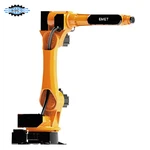

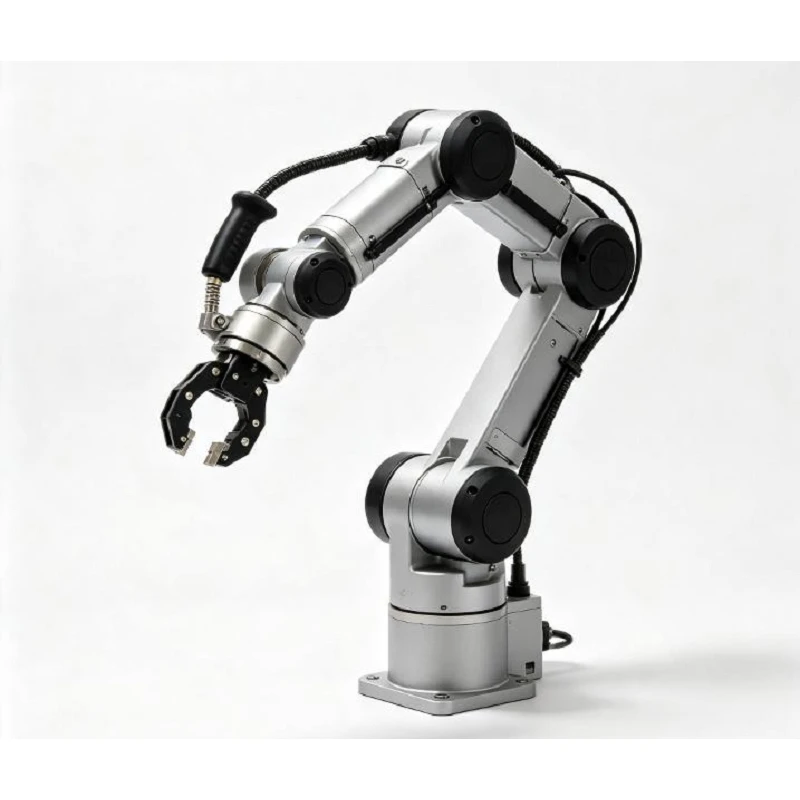
Pneumatic Assembly Assist Manipulator
The Pneumatic Assembly Assist Manipulator is an ergonomic material handling solution designed to help operators lift, move, rotate, tilt, and position heavy or awkward components across fixed workstations. By taking on 100% of the workpiece weight through a controlled pneumatic balance system, the manipulator allows operators to guide high-mass parts effortlessly within a defined working envelope.
Technical Specifications
|
Parameter |
Configurable / Typical Specification |
|
Equipment Type |
Pneumatic Assembly Assist Manipulator |
|
Drive & Power Source |
Compressed Air (Pneumatic) |
|
Payload Capacity |
30 - 300 kg (Evaluated with arm reach & load center) |
|
Working Radius |
1,500 - 3,500 mm |
|
Vertical Stroke |
800 - 1,800 mm |
|
Operating Air Pressure |
0.5 - 0.8 MPa (Recommended: 0.6 - 0.8 MPa) |
|
Arm Structure Type |
Rigid Arm / Articulated Jointed Arm |
|
Vertical Movement |
Pneumatic Powered Assist |
|
Horizontal Movement |
Manual Guided (Low Friction) |
|
Rotation Range |
Up to 360 degrees (Continuous or Limited) |
|
Tilting Function |
0 to 90 degrees / 0 to 180 degrees (Application-dependent) |
|
Control System |
Ergonomic Manual Pneumatic Controls |
|
Mounting Options |
Floor Column / Overhead Suspended / Customized |
Key Highlights
Load Capacity: 30-300 kg with dynamic pneumatic load balancing for effortless weightless handling.
Ergonomics & Precision: Complete 6-in-1 handling cycle - Lift, Move, Rotate, Tilt, Align, Position.
Custom End Effectors: Tailored gripping solutions (Mechanical, Vacuum, Magnetic, or Hybrid) based on your workpiece CAD/drawings.
Safety First: Integrated pressure-loss load retention, anti-drop protection, and mechanical safety stops.
Flexible Mounting: Floor-mounted column, overhead suspension, or custom structural integration.
Industry Applications
Automotive & EV: Engines, transmissions, EV battery modules, drive axles, sub-frames.
Industrial Equipment: Hydraulic pumps, industrial gearboxes, electric motors, valves, compressor housings.
White Goods & Electronics: Commercial HVAC units, metal cabinets, generator enclosures.
General Manufacturing: Machined castings, heavy stamping dies, plastic injection molds.
Standard Operating Workflow
Pick Up: Operator positions the end effector; safety locks or clamps engage the workpiece.
Lift: Pneumatic circuit pressurizes, balancing the load automatically.
Move: Operator smoothly translates the arm through the workspace.
Reorient: Rotary/tilt functions align the part to the assembly angle.
Align & Position: Part is inserted into the fixture or mating interface with tactile accuracy.
Release: Interlocked pneumatic controls release the part only when safely supported.
Return: Arm glides back to the home/pickup position for the next cycle.
Integrated Safety & Fault-Protection Systems
Safety features are built directly into the pneumatic logic circuit to safeguard both operators and workpieces:
Pneumatic Pressure-Loss Protection: In the event of a main air supply failure, check valves or safety reservoirs hold the load in place, preventing an abrupt drop.
Anti-Drop Interlock Controls: Prevents accidental release of the gripper while the load is suspended in mid-air.
Dual-Button Release Control: Requires two-handed confirmation to initiate part release.
Mechanical Travel Stops & Brakes: Adjustable rotation and height limiters to prevent collisions with surrounding machinery.
Pressure Monitoring Switches: Inhibits motion if incoming pressure drops below critical operational thresholds.
Custom End Effectors & Tooling Solutions
Mechanical Grippers
Best for: Machined parts, castings, shafts, tubes, and components with defined gripping faces or internal bores.
Features: Pneumatic clamping jaws, shaped nylon/rubber pads, and mechanical safety latches.
Vacuum Gripper Systems
Best for: Smooth, non-porous surfaces like sheet metal panels, glass, smooth plastics, and enclosures.
Features: Multi-cup configurations, vacuum level monitoring switches, and safety check valves.
Magnetic Grippers
Best for: Ferromagnetic steel plates, blocks, and heavy iron castings.
Features: Permanent-electro magnetic or pneumatic magnetic heads with air-gap compensation.
Custom Combination Fixtures
Best for: Complex, non-symmetrical, or fragile sub-assemblies.
Features: Integrates mechanical pins, vacuum cups, and custom clamp profiles while keeping key assembly interfaces exposed for fastening.
Comparison: Pneumatic Manipulator vs. Standard Overhead Hoist
|
Feature / Requirement |
Standard Overhead Hoist |
Pneumatic Assist Manipulator |
|
Primary Motion |
Pure Vertical Up/Down |
Full 3D Spatial Positioning |
|
Load Control Method |
Pendant Button / Cable Pull |
Direct Hand-Guided Zero-Gravity Control |
|
Multi-Axis Rotation / Tilt |
Requires Manual Wrestling / Rigging |
Integrated Pneumatic / Mechanical Rotation |
|
Precision Hole/Pin Alignment |
Difficult (Bouncy/Jerky Motion) |
Precise & Smooth Micro-Movement |
|
Off-Center Load Handling |
Unsafe (Swings / Tilts Cable) |
Rigid Arm Handles High Torque Moments |
|
Custom Workpiece Gripping |
Generic Hooks / Slings |
Tailored End Effectors (Clamps/Vacuum/Magnet) |
|
Operator Physical Effort |
Low for Lifting, High for Guiding |
Extremely Low for Both Lifting & Guiding |
Customized Engineering Request
To help us select and configure the correct unit, please provide:
Workpiece Data: Weight (kg), dimensions (Length x Width x Height), center of gravity, and 3D CAD drawing / photos.
Movement Requirements: Pick-up point, drop-off point, vertical stroke, working radius, and required rotation/tilt angles.
Plant Layout: Available ceiling height, floor mounting conditions, and nearby obstacles.
Pneumatic Supply: Available air pressure (MPa / PSI) and air line connection size.
FAQ
Hot Tags: pneumatic assembly assist manipulator, China pneumatic assembly assist manipulator manufacturers, factory, ac actuator driven manipulator arm, actuator controlled manipulator arm, brazed mounted manipulator arm, inclinometer guided manipulator arm, joystick controlled manipulator arm, quiet manipulator arm
Previous
Heavy-Duty Pneumatic ManipulatorNext
No InformationYou Might Also Like


Send Inquiry